


RO Membrane & Membrane Housing Price in Kenya 2026: 2521, 4040 and 8040 Explained

When an RO plant starts producing less water or the water tastes salty, the membrane or pre-filters usually need attention. This guide covers RO membrane and membrane housing prices on Buy More Mall and how to pick the right size.
KSh 26,500

KSh 62,400

KSh 102,570
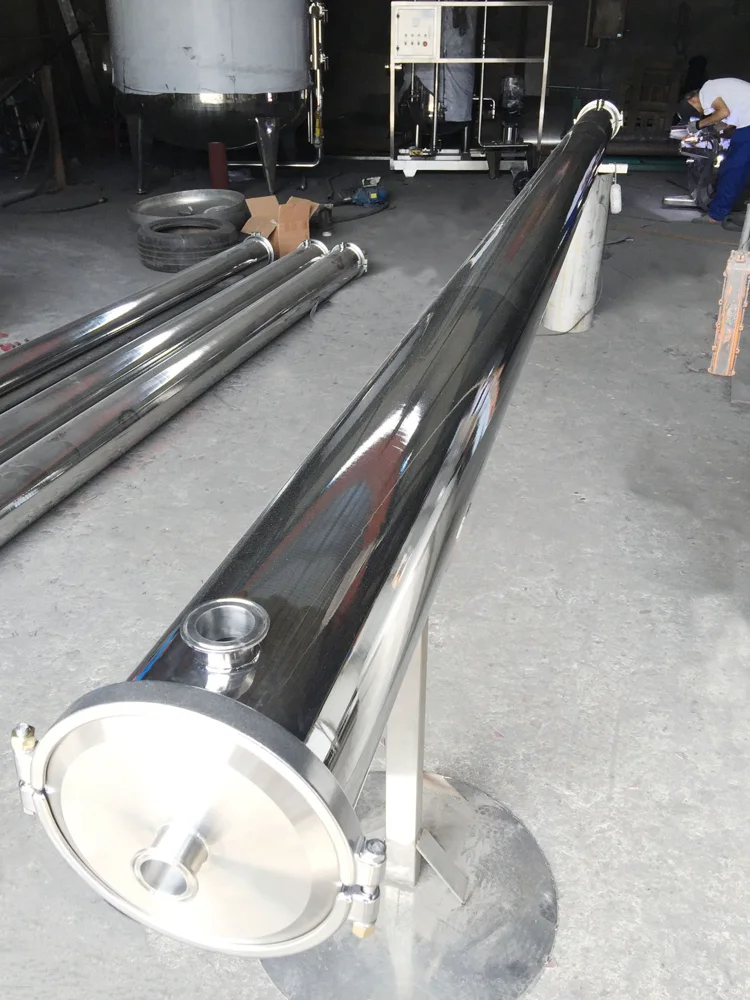
KSh 18,078

KSh 67,131

KSh 6,500
What Do 2521, 4040 and 8040 Mean?
The code is the membrane size in inches: the first two digits are the diameter and the last two the length. A 4040 is 4 inches wide and 40 inches long. An 8040 is 8 by 40 and makes several times more water than a 4040. A 2521 is 2.5 by 21, for small systems. The housing must match the membrane size.
RO Membrane Prices
| Membrane | Size | Type | Price |
|---|---|---|---|
| LP-4040 RO Membrane | 4040 | Low pressure | KSh 26,500 |
| ESPA2-4040 RO Membrane | 4040 | Low energy (ESPA2) | KSh 62,400 |
| LP21-4040 RO Membrane | 4040 | Low pressure | KSh 33,405 |
| LP-8040 Membrane | 8040 | Low pressure | KSh 102,570 |
Other sizes and brands: H-TECH RO Membrane Replacement Range.
Stainless Steel Membrane Housing Prices
FRP Membrane Housing Prices
The "-1", "-2" and so on at the end is the number of membranes the housing holds in series.
| Housing | Price |
|---|---|
| FRP End Port 4040-1 Membrane Housing | KSh 13,755 |
| FRP End Port 4040-2 Core Membrane Housing | KSh 21,719 |
| FRP End Port 4040-3 Core Membrane Housing | KSh 27,247 |
| FRP End Port 4040-4 Core Membrane Housing | KSh 33,171 |
| FRP side Port 8040-1 Core Membrane Housing | KSh 67,131 |
| FRP side Port 8040-2 Core Membrane Housing | KSh 73,055 |
| FRP side Port 8040-3 Core Membrane Housing | KSh 82,927 |
| FRP side Port 8040-4 Core Membrane Housing | KSh 96,748 |
| FRP side Port 8040-5 Core Membrane Housing | KSh 108,595 |
| FRP side Port 8040-6 Core Membrane Housing | KSh 125,152 |
| FRP side Port 8040-7 Core Membrane Housing | KSh 141,338 |
End Port or Side Port?
- End port: the water connections are on the end caps. Simple and cheaper, common on small and medium plants.
- Side port: connections are on the side of the tube, so housings can be stacked and piped neatly on a rack, and the end caps can be removed without taking the pipework apart. Common on larger plants.
- Stainless steel housings look neat and are strong. FRP housings do not rust and are the usual choice for 8040 membranes and salty water.
Pre-filters and Instruments
The cartridge filters before the membrane protect it. Change them on time or the membrane will clog.
Test the water: a TDS meter on the product water is the quickest way to see if the membrane is still working. A rising TDS reading usually means the membrane needs cleaning or replacement.
When to Replace an RO Membrane
- Product water TDS rises and stays high after cleaning.
- Output falls a lot even after changing the pre-filters and cleaning.
- The pressure difference across the membrane keeps rising (fouling or scaling).
Good pre-treatment and regular cleaning make membranes last much longer. See the RO System Maintenance Guide.
Not sure which one fits? Send us your details on WhatsApp or through the product page and we will help you choose.
How Does an RO Membrane Work?
A reverse osmosis membrane is a thin, tightly wound sheet with pores far smaller than dissolved salts. Pressure from the pump pushes water through it. Clean water (the permeate) passes into the centre tube, and the salts and impurities that cannot pass are washed out with the reject (concentrate) water. That reject flow is what keeps the membrane surface from blocking, so every RO system sends some water to drain.
What Does an RO Membrane Remove?
| Contaminant | Removed by the RO membrane? |
|---|---|
| Dissolved salts (TDS), salty taste | Yes, most of it |
| Fluoride, nitrates, hardness (calcium, magnesium) | Yes, most of it |
| Bacteria and viruses | Largely, but a UV sterilizer after the RO is the safe way to guarantee disinfection |
| Chlorine | No, and chlorine damages most RO membranes. A carbon pre-filter must remove it first |
| Sand, rust and mud | They block the membrane. Sediment pre-filters must catch them first |
That is why pre-filters protect the membrane and a UV stage often follows it. See UV Water Sterilizer Price in Kenya.
How to Check if Your RO Membrane Is Still Good
- Measure the TDS of the raw water going in with a TDS meter.
- Measure the TDS of the product water coming out of the membrane.
- Work out the rejection: (raw TDS − product TDS) ÷ raw TDS × 100. For example, 1,000 ppm in and 30 ppm out is 97% rejection.
Write the figure down when the membrane is new and check it monthly. A steady fall in rejection, a big drop in output at the same pressure, or a rising product TDS means the membrane needs cleaning or replacement. Change the pre-filters first: dirty pre-filters cause many of the same symptoms.
Can an RO Membrane Be Cleaned?
Yes. Industrial and commercial membranes are cleaned in place (CIP) with special acid cleaners (for scale) and alkaline cleaners (for organic fouling and slime) circulated through the housing. Cleaning works best early, when output has dropped by roughly 10–15%. A membrane that is badly scaled, torn, or damaged by chlorine cannot be recovered. Small home membranes are usually replaced rather than cleaned.
Shelf life and storage: a new membrane stays good for a long time in its sealed bag, kept cool and out of the sun. Never let a used membrane dry out or freeze.
How to Replace an RO Membrane
- Switch off the power and close the feed valve; release the pressure.
- Open the housing end cap and pull out the old membrane (note which way it faced).
- Clean the inside of the housing.
- Lightly wet the new membrane's O-rings and brine seal with clean water (no oil or petroleum jelly), then push it in the right way round, brine seal towards the feed end.
- Close the housing, open the feed, and send the first product water to drain while the membrane flushes.
- Check the product TDS and record it as your new baseline.
Frequently Asked Questions
How much is a 4040 RO membrane in Kenya?
From KSh 26,500 for the LP-4040 to KSh 33,405 for the LP21-4040 on Buy More Mall.
How much is an 8040 RO membrane in Kenya?
The LP-8040 membrane is KSh 102,570.
What does 4040 mean on an RO membrane?
4 inches in diameter and 40 inches long.
How often should I change RO pre-filters?
It depends on water quality and use. Commercial plants often change sediment cartridges every 1 to 3 months. Change them when the pressure drop rises.
Prices shown are regular prices on Buy More Mall. Many products are currently on offer, so open the product page to see today's price.
How does an RO membrane work?
Pressure pushes water through a membrane whose pores are smaller than dissolved salts. Clean water passes through and the salts are washed away in the reject water.
Can an RO membrane be cleaned?
Yes. Commercial membranes are cleaned in place with acid and alkaline cleaners, best when output has dropped by about 10–15%. Chlorine-damaged or torn membranes must be replaced.
Does an RO membrane remove fluoride?
Yes, an RO membrane removes most fluoride, along with most other dissolved salts.
Does an RO membrane remove chlorine?
No. Chlorine damages most RO membranes, so a carbon pre-filter removes it before the membrane.
How do I check RO membrane quality?
Compare the TDS going in with the TDS coming out. Rejection = (raw − product) ÷ raw × 100. A steady fall means it needs cleaning or replacing.
How much is an RO membrane in Kenya?
RO membranes on Buy More Mall start from KSh 26,500.
Related Guides
- RO System Maintenance Guide
- Industrial RO Plant Price
- RO Water Purifier Price
- FRP Tank Sizes & Prices
- UV Water Sterilizer Price
Browse the range in RO Membranes & Housings.
Recent Posts

Girls' Party Dresses Price in Kenya (2026): Flower Girl, Birthday and Princess Dresses

Kids Clothes Size Chart by Age (Kenya 2026): Baby, Toddler and Children Sizes Explained
Kids Clothes Bales Price in Kenya (2026): Baby and Children Bales for Resellers

African Print Suits for Men in Kenya (2026): Kitenge, Ankara and Occasion Suit Prices

Corporate Wear for Men in Kenya (2026): Office Suits, Prices and Dress Code Guide

How to Sell on WhatsApp Business in Kenya (2026): Catalogue, Status and Getting Paid
House Help Salary in Kenya (2026): Minimum Wage, Nanny Pay and How to Hire
Knotless Braids Price in Kenya (2026): Cost, How Long They Last and Aftercare

How to Prime a Water Pump (Surface and Jet Pumps): Step-by-Step Guide 2026
 buymoremall
Kenya's Online Marketplace
Buy More Mall Kenya gives you a direct link to manufacturers, suppliers and service providers. Sellers are verified, there are no shortcuts, and customised orders come at affordable rates.
- Buy direct from manufacturers & suppliers
- Verified sellers and service providers
- Pay securely with M-Pesa
Shop
Sell & Earn
Help
Contact Us
- 0717 263 774
- Chat on WhatsApp
- buymoremallkenya@gmail.com
- Eastern bypass Ruiru Near Naivas super market @ kamakis & Nanyuki Neema Academy
- Contact page