Borehole Water Treatment in Kenya: Fluoride, Salty & Hard Water Solutions (2026 Guide)
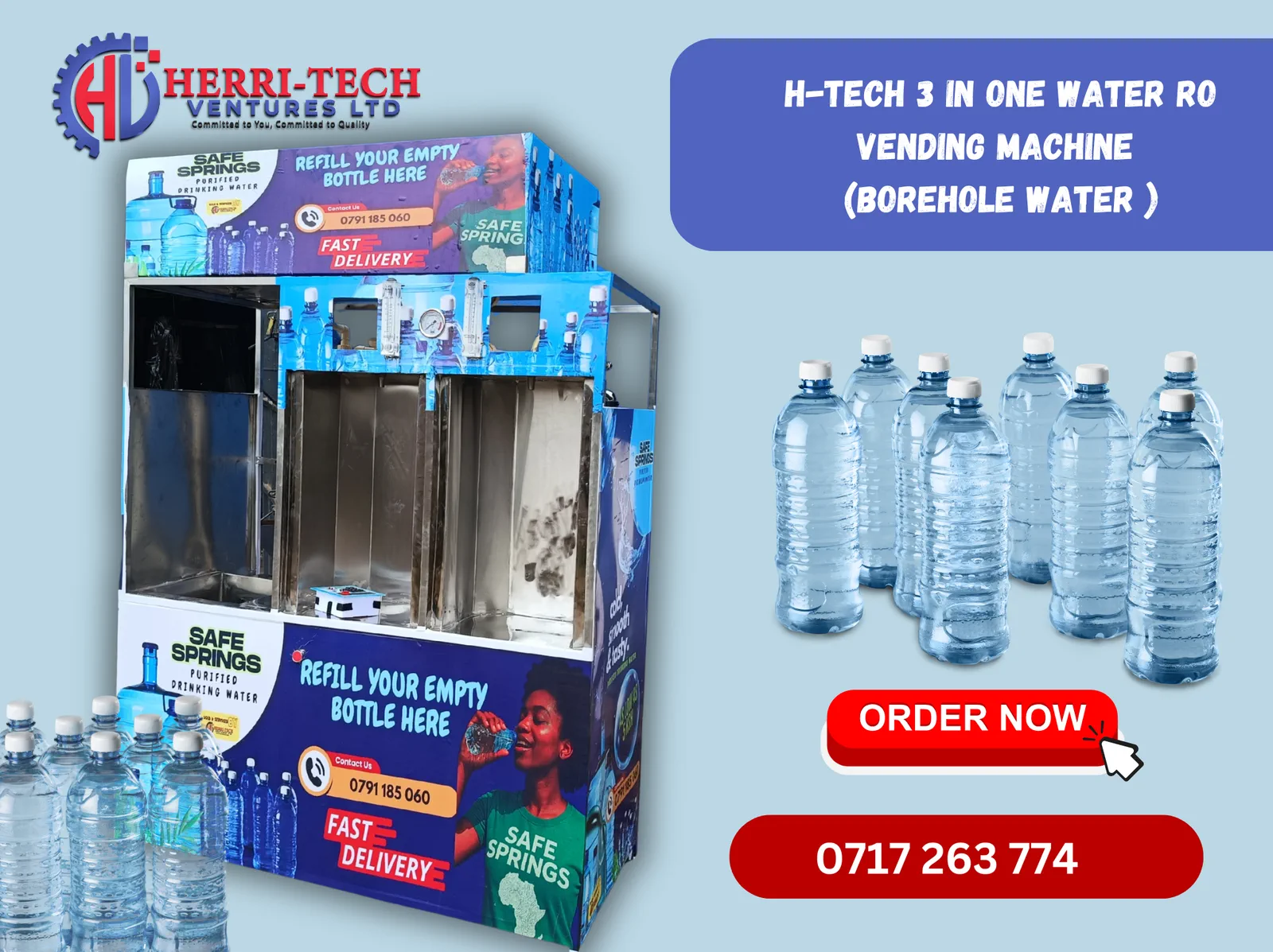
Many Kenyan homes, farms, schools, hotels and businesses rely on borehole water, but untreated borehole water is often salty, hard or high in fluoride. This guide explains the common borehole water problems in Kenya, how to test your water and which treatment solves each problem, with H-TECH treatment systems available on Buy More Mall.
Common Borehole Water Problems in Kenya
1. High fluoride
Kenya's drinking-water standard and the World Health Organization set a limit of 1.5 mg/L for fluoride. Because of volcanic rocks, groundwater in much of the Rift Valley and parts of the Nairobi region often exceeds this, sometimes reaching 3 to 6 mg/L or more. One study of the Central Kenya Rift found most water sources above the WHO guideline. Long-term exposure causes dental fluorosis (brown-stained teeth), especially in children.
2. Salty water (high TDS)
Water with a lot of dissolved salts tastes salty or bitter, and customers will not buy it as drinking water. This is common in coastal and arid areas.
3. Hard water
Hard water leaves white scale in kettles, boilers, pipes and water heaters, and makes soap lather poorly. It damages equipment in hotels, laundries and factories.
4. Bacteria, iron and cloudiness
Boreholes can also carry bacteria, iron (brown or red staining) or sediment, especially if the well is poorly sealed.
Step 1: Test Your Water First
Before buying any equipment, take a sample to a government-approved water laboratory. Ask for fluoride, total dissolved solids (TDS), hardness, iron, pH and bacteria. The Water Resources Authority also requires a water quality analysis as part of a borehole water permit, so you may already have a report.
Step 2: Match the Treatment to the Problem
| Problem | Recommended treatment | Where to find it |
|---|---|---|
| High fluoride | Reverse osmosis (RO) | Commercial RO, Domestic RO |
| Salty water (high TDS) | Reverse osmosis (RO) | Borehole RO machines |
| Hard water / scaling | Water softener | Water Softeners |
| Sediment, iron, taste | Sand and carbon filters (pre-treatment) | FRP Tanks & Media Filters |
| Selling treated water | RO water vending machine | Water Vending Machine Price Guide |
Reverse osmosis removes dissolved salts and fluoride, which is why it is the standard treatment for Rift Valley and salty boreholes. Larger RO plants include sand and activated carbon pre-filters to protect the membrane.
RO Systems for Borehole Water
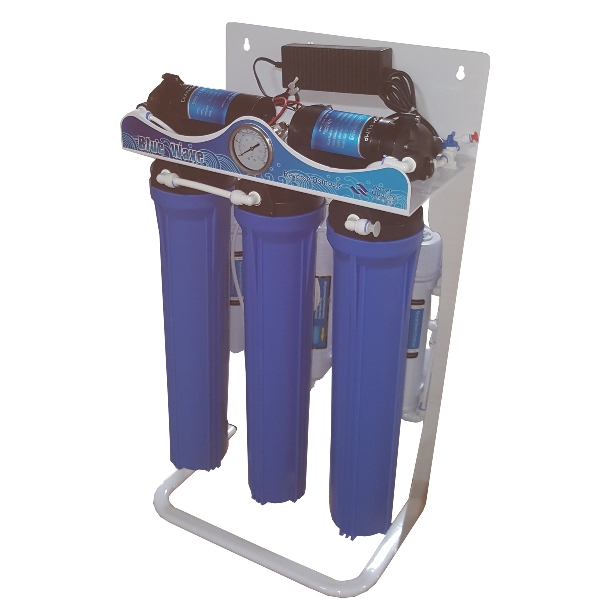
KSh 98,000
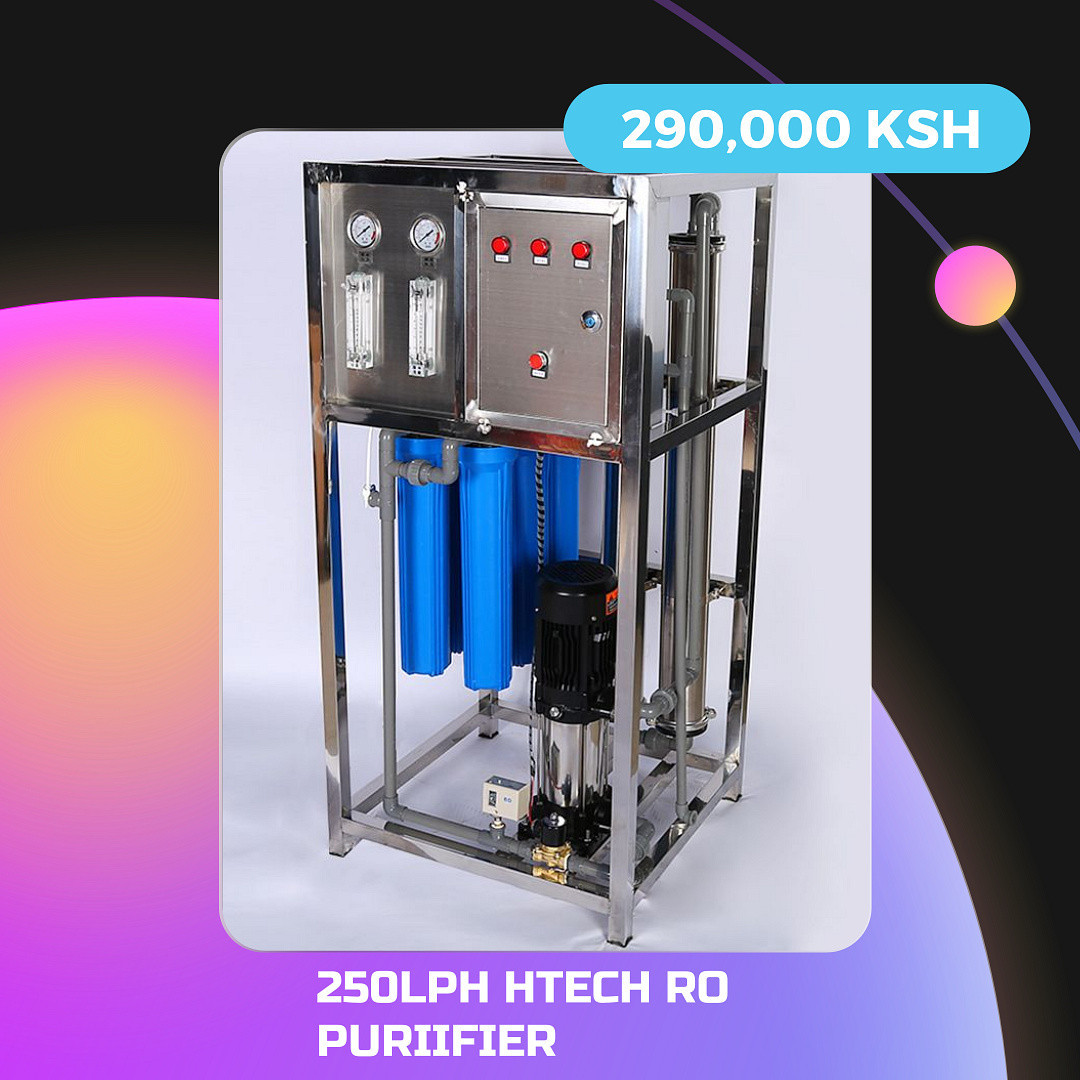
KSh 290,000
KSh 380,000
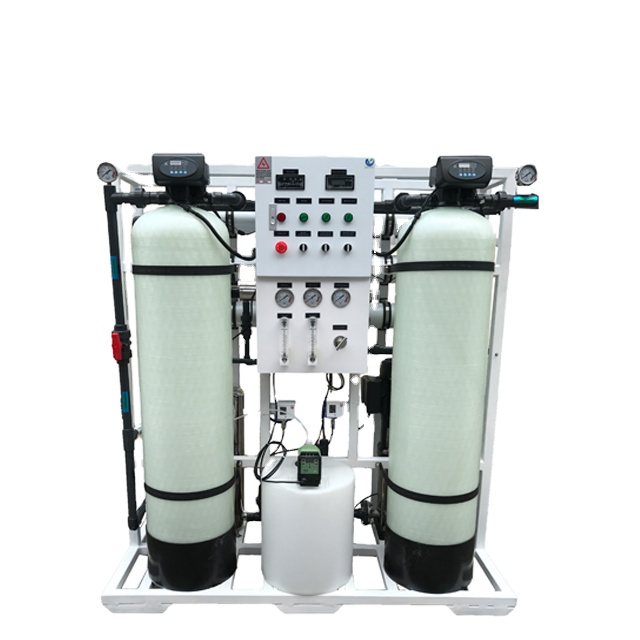
KSh 500,000
KSh 550,000
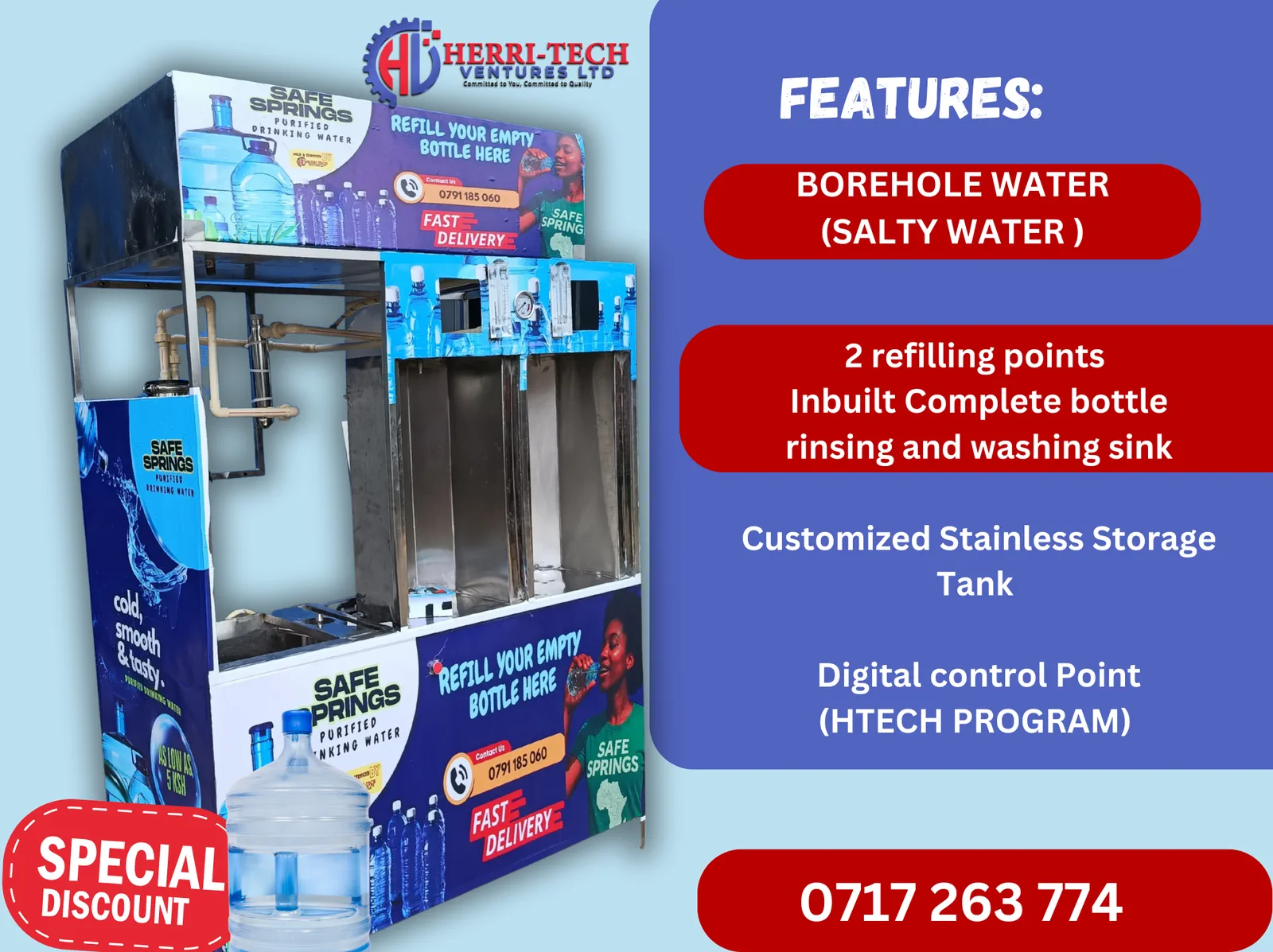
KSh 920,000
H-TECH RO systems on Buy More Mall. Tap a photo for details.
- Homes and small offices: the RO-400G-D02B 5-Stage RO System (KSh 98,000) or an under-sink RO system. See the RO Water Purifier Price Guide.
- Schools, hospitals and hotels: the Htech 250LPH RO PURIFIER (KSh 290,000), which has a 2,000 litres-per-day duty cycle, up to the Htech 750lph Ro purifier plant (KSh 500,000).
- Selling water from a borehole: the H-Tech 3-in-1 Borehole RO 500 LPH (KSh 550,000) and H-Tech 3-in-1 Borehole RO 1000 LPH (KSh 920,000). Read How to Start a Water Refilling Business.
Water Softeners for Hard Borehole Water
H-TECH water softeners are sized in tonnes per hour (T/H), which is roughly the number of cubic metres of water treated per hour.
KSh 60,400

KSh 115,000
KSh 165,000

KSh 340,000
| Softener | Price |
|---|---|
| 1 T/H 0844 H-Tech Water Softener Machine | KSh 60,400 |
| 2 T/H 1265 H-Tech Water Softener Machine | KSh 115,000 |
| 4 T/H 1665 H-Tech Water Softener Machine | KSh 165,000 |
| H-Tech 8T/H 2472 Water Softener Machine | KSh 340,000 |
| H-Tech 15 T/H 3072 Water Softener Machine | KSh 680,000 |
| H-Tech 25 T/H 4894 Water Softener Machine | KSh 1,458,000 |
See the full range from KSh 60,400 in Water Softeners.
Step 3: Maintain Your System
- Replace sediment and carbon cartridges on schedule to protect RO membranes.
- Keep salt in the softener brine tank.
- Re-test your treated water regularly, especially if you sell it.
- Spares are available in RO Membranes & Housings.
Frequently Asked Questions
How do I remove fluoride from borehole water in Kenya?
Reverse osmosis (RO) is the most effective way to remove fluoride from drinking water. Test your water first to confirm the fluoride level.
What is the safe fluoride level in drinking water?
Kenya's drinking-water standard and the WHO set a limit of 1.5 mg/L.
How do I treat salty borehole water?
Salty (high TDS) water needs reverse osmosis. For selling water, see the H-TECH 125 LPH 3-in-1 Borehole RO Water Vending Machine.
Do I need a softener or RO?
A softener removes hardness (scale) but not salt or fluoride. RO removes salts and fluoride. Some sites use both.
Licence fees, requirements and market prices change. The figures here were checked in September 2026. Confirm current requirements with the relevant authority and your county government before investing.
Prices shown are regular prices on Buy More Mall. Many products are currently on offer, so open the product page to see today's price.
Related Guides
- How to Start a Water Refilling Business in Kenya
- How to Start a Milk ATM Business in Kenya
- Cooking Oil ATM Business in Kenya
- Milk ATM Price in Kenya
- Water Vending Machine Price in Kenya
- RO Water Purifier Price in Kenya
- Milk Pasteuriser Price in Kenya
- RO vs UF vs Water Softener
- Semi vs Fully Automatic RO Vending Machine
- Municipal UF vs Borehole RO Refilling Station
- RO System Maintenance Guide
- Water Softener Price & Sizing Guide
Recent Posts

List Your Property on Buy More Mall Kenya: Houses, Apartments, Land & Commercial Property
Sell Building & Construction Materials Online in Kenya: Join Buy More Mall as a Vendor
Sell Electronics & Phones Online in Kenya: Become a Buy More Mall Vendor
Sell Water Treatment Equipment Online in Kenya: Join Buy More Mall as a Supplier
Sell Clothes & Fashion Online in Kenya: Open Your Boutique on Buy More Mall
Sell Beauty, Hair & Health Products Online in Kenya: Become a Vendor
Sell Car Parts, Tyres & Accessories Online in Kenya: Become a Vendor
Sell Biodigesters & Sanitation Solutions Online in Kenya: Become a Vendor
 buymoremall
Kenya's Online Marketplace
buymoremall
Kenya's Online Marketplace
Buy More Mall Kenya gives you a direct link to manufacturers, suppliers and service providers. Sellers are verified, there are no shortcuts, and customised orders come at affordable rates.
- Buy direct from manufacturers & suppliers
- Verified sellers and service providers
- Pay securely with M-Pesa
Shop
Sell & Earn
Help
Contact Us
- 0717 263 774
- Chat on WhatsApp
- buymoremallkenya@gmail.com
- Eastern bypass Ruiru Near Naivas super market @ kamakis & Nanyuki Neema Academy
- Contact page